

Valletta may have been built in the 16th century and be famous for it’s baroque architecture but if you scratch below the surface a little you will find some far more recent history. So that was exactly what we headed for when we arrived in Malta‘s capital city
Malta and the Second World War
Because of it’s strategic position in the heart of the Mediterranean Sea, Malta played a critical role in the early years of WWII. Being only 90km from Sicily and close to German and Italian shipping lanes it was crucial to the Allied war effort. After the heaviest bombing of the war it was used to launch attacks on the Italian navy, had a a submarine base, and had listening stations to intercept enemy communications. The Island of Malta was awarded the George Cross by King George VI in 1942 for their bravery and heroism.
In 1940 at the height of the German bombing campaign, a secure operations centre was required. Existing tunnels that were originally built to house Turkish slaves beneath the Upper Barakka Gardens and the Saluting Gallery were developed and completed in early 1943 when the tide of the war was turning in the Allies favour. The site is named after Giovanni Lascaris, who had previously had a garden built where the Saluting Gallery now sits.
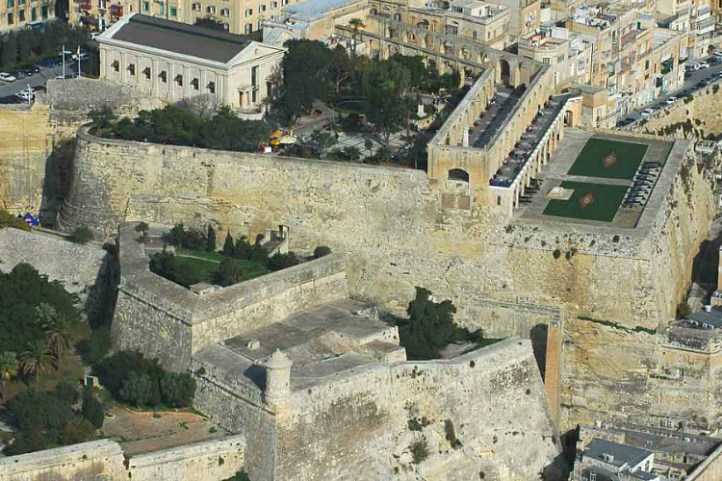
The Operation Headquarters controlled a network of radar stations around the island and was the command centre for Field Marshall Montgomery and General Eisenhower during the Invasion of Sicily in 1943. Around one thousand people worked in the tunnels during this period and the staggering thing is that they remained completely secret. Even the local population living around and perhaps on top of the tunnels had absolutely no idea of their existence.
After the war the tunnels were the headquarters of the Royal Navy‘s Mediterranean fleet and later a strategic command centre for NATO. Closed in 1977 they have now been restored as a museum by the Malta Heritage Trust.
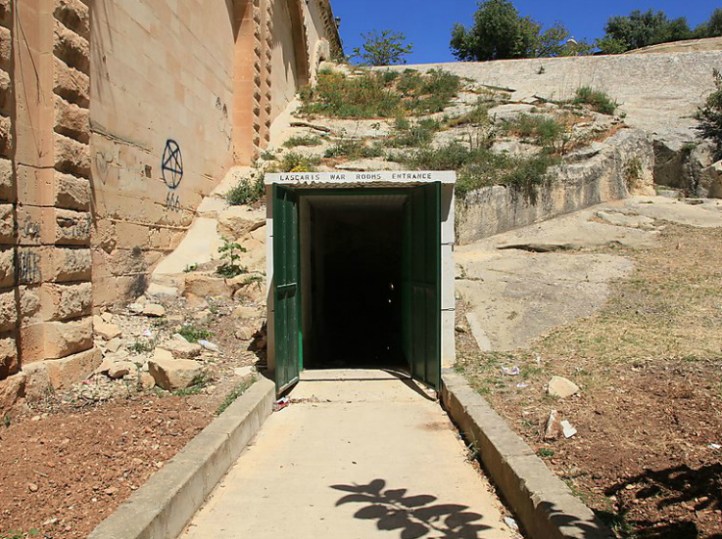
The Lascaris War Rooms
We had always planned to go straight to the War Rooms as we weren’t sure how long it might take to see them properly. As the signs seemed virtually non-existent it was a miracle that we stumbled upon the entrance down a long steep staircase, through a non-descript arch although Jo will tell you that she knew ‘exactly‘ where she was going!
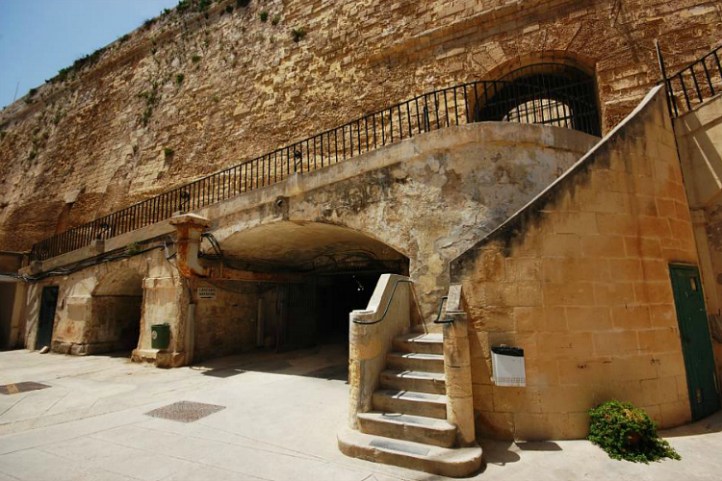
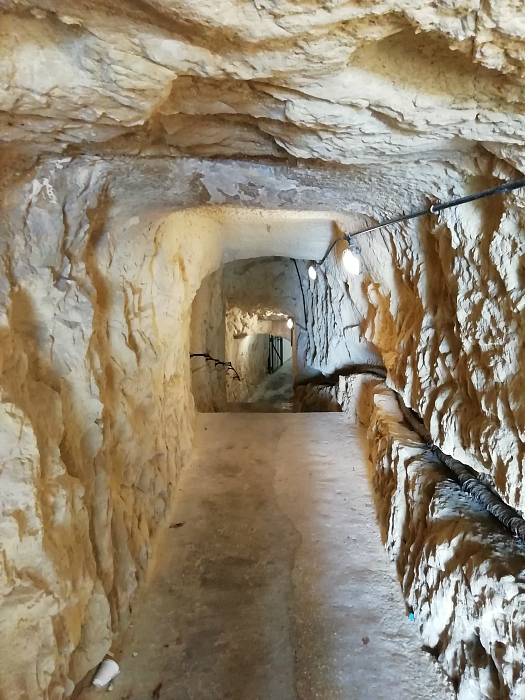
A long cold stone tunnel lead to the main entrance and once we’d paid our 12 euros each we headed down to start our guided tour. Now we’re not usually that bothered about guided tours, in fact we usually avoid them like the plague. We like to wander and explore ourselves and often the volunteer guides can be a little long-winded and dull. So we waited for our guide with trepidation with a handful of other visitors.


James the Tour Guide
What we got was James! A twenty-something student working down there a couple of days a week but filled to the absolute brim with enthusiasm and excitement over the subject matter. From his first words to his last he brought the whole place to life describing events in glorious detail and making it fantastically interesting. Now we are naturally interested in 20th century history anyway but James took it to another level, The time flew by as he described the military actions, political scenario, local situation, and major events in such a colourful descriptive way. Best tour guide we have ever had by a mile.
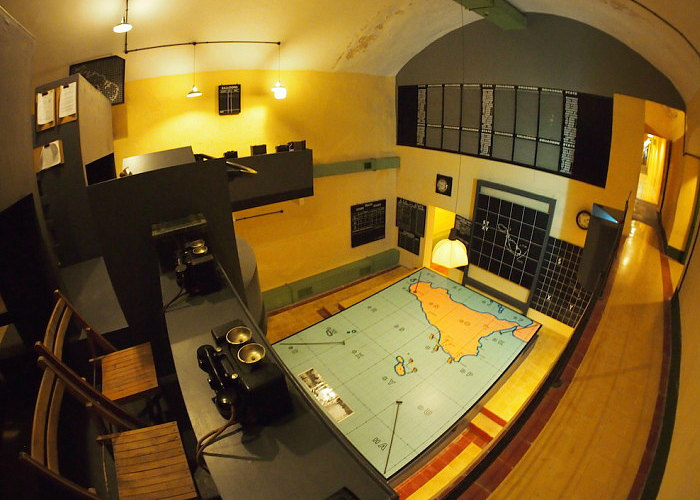


A couple of hours flew by as we learned that Malta was the most bombed place on earth at the time, that Eisenhower ignored Churchills orders when invading Sicily, that NATO managed the Suez Crisis from here, and so much more. It was gripping fascinating stuff and we were both a little disappointed when it came to an end. A massive thank you to James for making our visit so interesting and memorable.

What we found most amazing was that no-one who didn’t work in the tunnels had a clue that they even existed. The first that both the Italians and Germans knew was when NATO took over the site in the 1950s. Incredible isn’t it? Over 1000 people working here through the war and nobody had any idea. Brilliant secrecy.
So definitely one of the best museums and historical sites that we have ever visited and highly recommended if you are ever in Valletta. Do not visit Malta and miss out on the Lascaris War Rooms especially if you’re interested in recent history.

16/03/2019


 JWalking
It’s wonderful to have such enthusiastic tour guides as it’s quite infectious and make your experience more enjoyable. An interesting piece of history there guys. 🙂
LikeLiked by 1 person
He really brought the whole tour to life. Sometimes however interesting a place is the tour can be a little dry but James was the complete opposite.
LikeLiked by 1 person
Glad to hear. 😊
LikeLiked by 1 person
Wow!
LikeLiked by 1 person
Definitely was a real wow day.
LikeLiked by 1 person
A while back I read a trilogy by David Black about submariners in WW2. The third book in the series touches on Malta’s role in the war. They’re available on Kindle and I highly recommend them but they need to be read in sequence. The first being Gone to Sea in a Bucket.
LikeLiked by 1 person
Sounds like a good read, may stick that on the list of things I need to read. Thanks Itching.
LikeLiked by 1 person
Very interesting, I can see how delighted you were to find this place. Next you need to try the Ramsgate tunnels. Very similar but without the lovely sunshine to come out to! xx
LikeLiked by 1 person
Just as interesting I’m sure. Next time we’re down that way ………
LikeLike
How incredible. To think that 1000 people came and went and no one knew if it’s existence! That is just amazing and the tour sounded fabulous. Definitely one to do!
LikeLiked by 1 person
It was a great tour, we could have stayed for another couple of hours easily.
LikeLiked by 1 person
So awesome, imagine all of the history there! Rad!
LikeLiked by 1 person
Such a historical place. Thanks for reading, really appreciated.
LikeLike
The work that must have gone into making those tunnels. I think I would have been a bit claustrophobic, especially if I was one of the thousand. I would have terrified of being bombed, and buried alive. Sounds like a great tour guide.
LikeLiked by 1 person
Fascinating place and you’re so right about the work involved. Amazing they kept it so secret too.
LikeLiked by 1 person
We visited The Lascaris War rooms when we were there and also found it found it very interesting! It’s amazing to think that over 1000 people worked in the tunnels all that time and nobody knew!!
Great pictures📸👍
LikeLiked by 1 person
Thanks Liz, such a fascinating place to visit. Highly recommended to anyone going to Valletta.
LikeLike
What a fascinating place to visit – I’ve never heard of the Lascaris War Rooms! And how incredible that no-one other than those who worked there even knew of their existence!
LikeLiked by 1 person
Such an amazing story. Apparently even the people living in adjoining houses had absolutely no idea. Very sneaky eh?
LikeLike
I have absolutely no doubt that Jo knew EXACTLY where she was going and I cannot believe that you would dare to suggest otherwise Mr Ringwood. Awesome bit of history and absolutely fascinating stuff. Did the 1000 people live there as well? I can’t figure out how they could go unnoticed.
LikeLiked by 1 person
Don’t think they lived there but they went in and out on shifts 24 hours a day. Unbelievable really.
LikeLike
It’s great when your guide is passionate and enthusiastic about his topic. What an interesting place to visit.
LikeLiked by 1 person
It was fascinating and James the Guide brought it all to life. Sometimes those guides can do the opposite though unfortunately.
LikeLike
Despite several visits to the island have never made it to the war rooms. My husband’s grandfather spent some time in Malta during the war and had fond memories of the island.
LikeLiked by 1 person
Fascinating place which you would probably find even more interesting with the family connection.
LikeLiked by 1 person